
Downtown Bozeman is packed with historic buildings and each one has its own story. There’s a frontier-era brick landmark, an Art Deco hotel, a vaudeville-era theatre, and even a jail that was supposed to be escape-proof (spoiler: it wasn’t).
In this blog, Knoff Group Real Estate is sharing a few of our favorite Bozeman commercial landmarks. And in addition, some of the holiday fun coming to Main Street this holiday season.
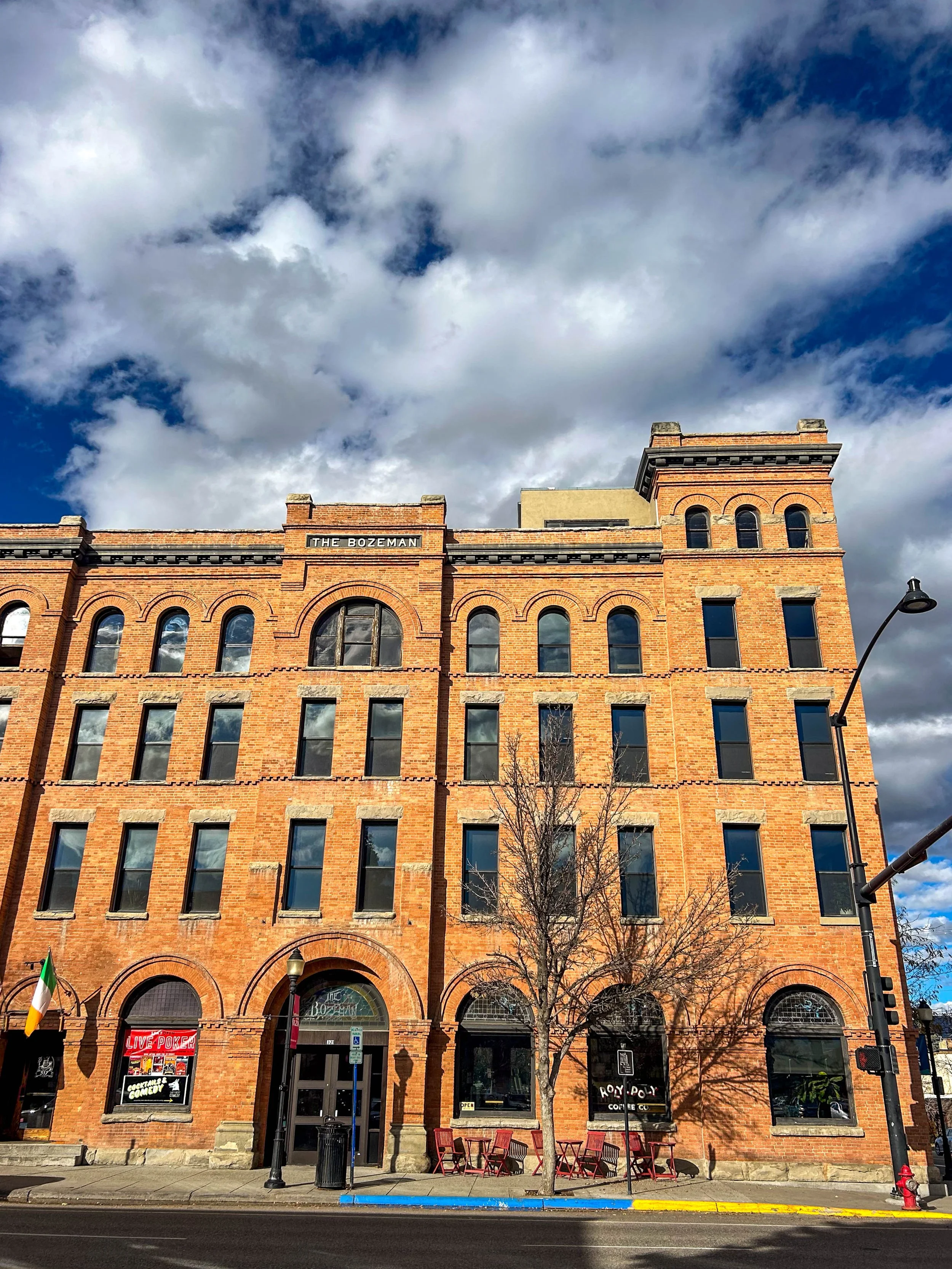
321 E Main Street | Bozeman Hotel
Did you know Bozeman bid to be the Montana state capital back in the day? The historic Bozeman Hotel opened in March 1891 and was built during the city’s unsuccessful state capital run. Sitting at 321 East Main Street, the five-story Romanesque building was designed by George Hancock and funded by a mix of local citizens and Boston investors, who were hoping for a return on their investment if Bozeman won the state seat.
At the time, the Bozeman Hotel was the most luxurious hotel in the state, with 136 guest rooms, street-facing balconies, and call bells in every room.
Over the past 30 years, the hotel has undergone various renovations and preservation efforts, and work continues to keep the building fully functioning and as close as possible to its original style.
Nowadays, the building operates as a mixed-use commercial and entertainment space rather than an active hotel. You’ll find a variety of local spots on the first floor, including Pub 317, Last Best Comedy, the Zebra Casino, Roly Poly Coffee, Izakaya Three Fish, and the Pour House.
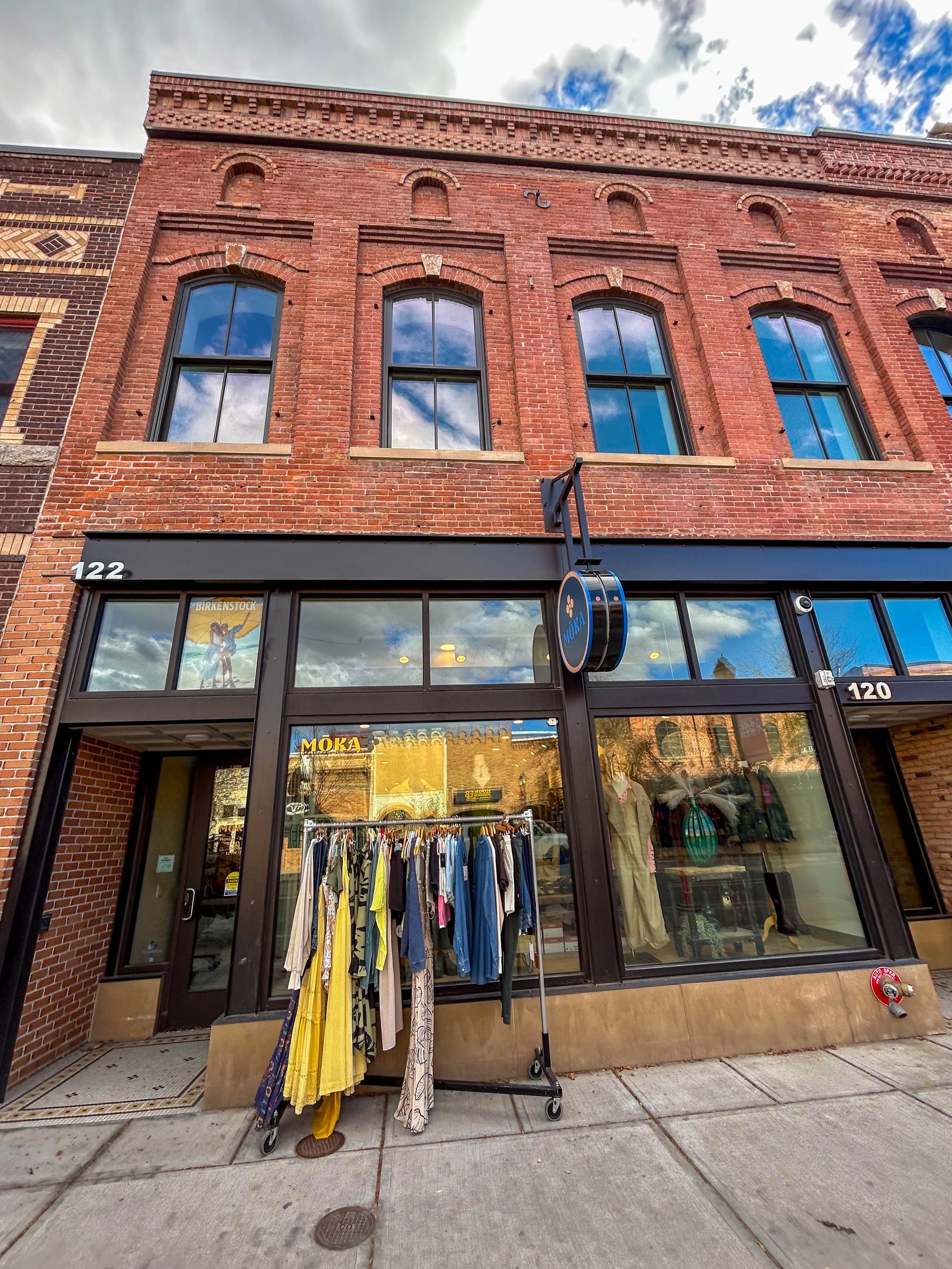
118 E Main Street | Cooper & Black Building
The Cooper & Black Building is the oldest surviving masonry and commercial structure on Main Street. Located at 118 E Main Street, this Italianate-style brick building was built in 1872 by business partners Walter Cooper and Col. Leander M. Black and designed by a Missouri architect.
Back in the day, the ground floor was home to Walter Cooper’s Armory and Gun Manufactory, Leander Black’s Mercantile, W.M. Morris Drug Store, and the Perkins and Stone Family Market. The second floor was home to the Young Men’s Library Association, which was Bozeman’s first library.
Today, the historic 1872 red brick front facade has been retained and houses a slew of businesses - on the first floor, commercial and retail space (like Moka Boutique), commercial office space on the second, and residential apartments on the newly added third-floor.
As it pertains to the 2026 holiday season, Moka Boutique will be participating in the Downtown Winter Art Walk and the annual Christmas Stroll.
17 West Main | Ellen Theatre
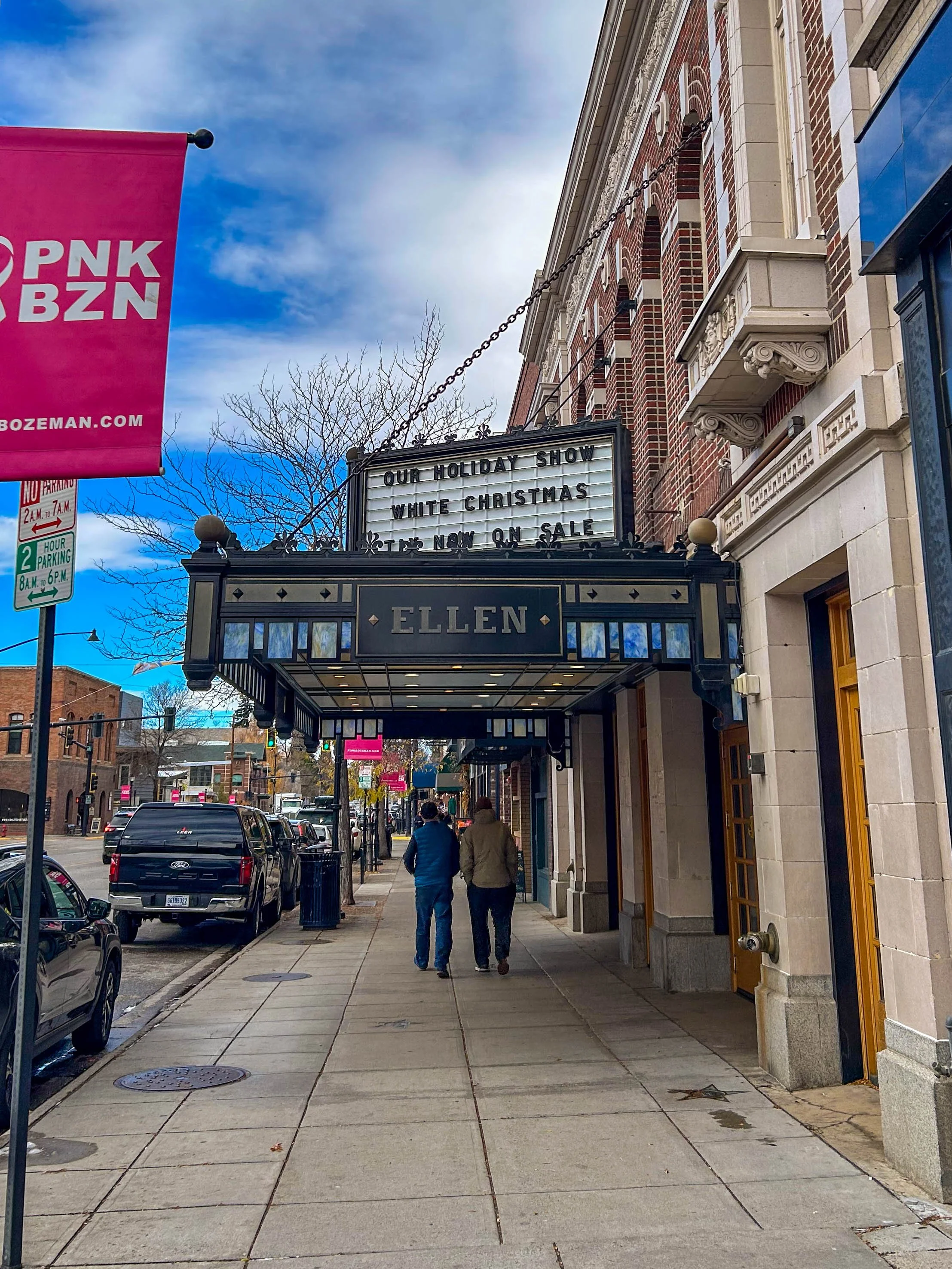
The Ellen Theatre was opened in December 1919 by prominent local pioneers Thomas Byron Story and Nelson Story Jr. as a gift to their mother, Ellen Story. Designed by Fred Willson, this project had an initial budget of $150,000, although final construction costs reached $200,000.
The two-story Beaux-Arts style show palace originally seated 700 to 800 guests, and hosted a variety of shows, silent movies, school plays, and even a traveling opera. Over the years, it welcomed stars such as Vivian Vance (Ethel Mertz from I Love Lucy), fan dancer Sally Rand, comics Gallagher and Shean, and more.
In 1929, Alexander Milan Russell took ownership of the theatre and supported its transition to sound, installing an RCA Photophone system. Unfortunately, the rise of multi-screen movie theaters created a time of hardship for the theatre, and in 2008, the non-profit Montana TheatreWorks acquired and restored the building.
Today, the Ellen Theatre is one of the best places around Bozeman to catch a play, musical, film, comedy act, or concert.
In holiday season 2026, The Ellen Theatre will present Irving Berlin’s White Christmas as its holiday musical production. Dates run from December 5th to December 20th and tickets are available online or by calling the box office (406-585-5885).
Additionally, the annual production of Charles Dickens’ “A Christmas Carol” will run through most of December with evening performances and afternoon matinees on the weekend.
105 W Main Street | Hotel Baxter
Back in 1927, the Bozeman Community Hotel Corporation (a group led by Eugene Graf and about 250 local Bozemanites) financed the Hotel Baxter. Named after George Baxter, a local rancher and entrepreneur who contributed a large share of the hotel’s funding, the Baxter Hotel was designed by local architect Fred Willson as a premier Art Deco hotel.
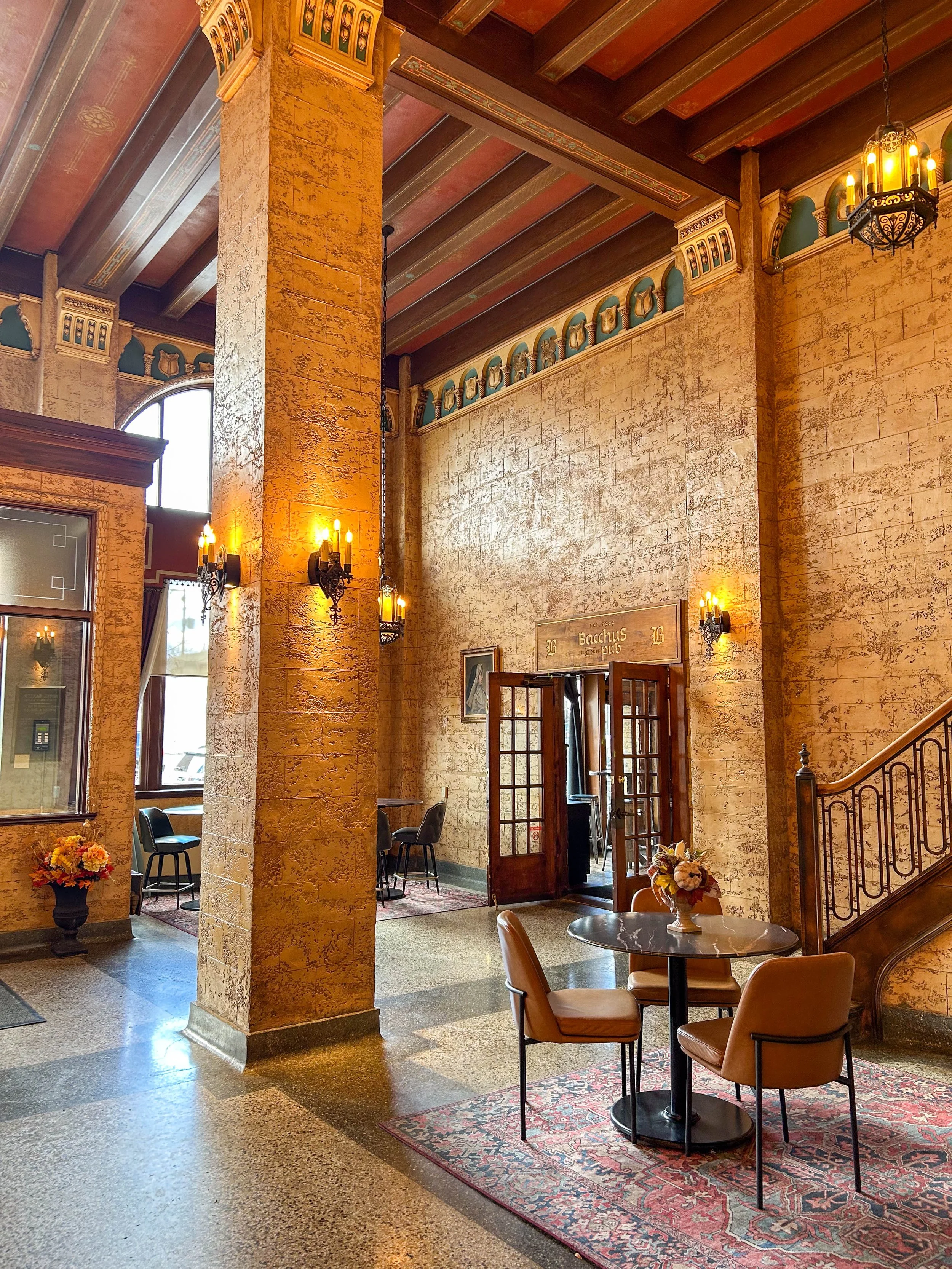
The Hotel Baxter opened in March of 1929 and featured 76 guest rooms, 8 top-floor apartments, a water fountain, a mezzanine ballroom, a two-story imitation travertine lobby, and an English pub-style coffee shop. It also boasted the famous 32-foot neon roof sign that has remained a classic fixture of downtown Bozeman.
In 1959, the Hebgen Lake earthquake shook the hotel, and caused ceiling plaster to fall on guests who fled into the streets in their pajamas, suitcases in hand. Luckily, the hotel only suffered minor interior damage and remained structurally intact post-earthquake.
In 1982, the building was converted into residential condominiums but continued to preserve its historic public spaces. For many years, a variety of Bozeman businesses have operated in the ground level space, like Bacchus Pub and Ted’s Montana Grill.
Now, the building has begun a multi-year restoration to transform the upper-level spaces into a luxury boutique hotel. The hotel will feature 32 rooms, a wellness center, a variety of social spaces (including a 3,000 sq-ft ballroom and exclusive members’ club), and will continue to host ground-floor commercial tenants.
Additionally, Bozeman skiers and riders often look to the iconic rooftop of the Hotel Baxter, where a flashing blue light hits to signal Bridger Bowl has received two or more inches of fresh snow in the last 24 hours.
During the 2026 holiday season, the Hotel Baxter lobby will host pictures with Santa during the annual Bozeman Christmas Stroll.
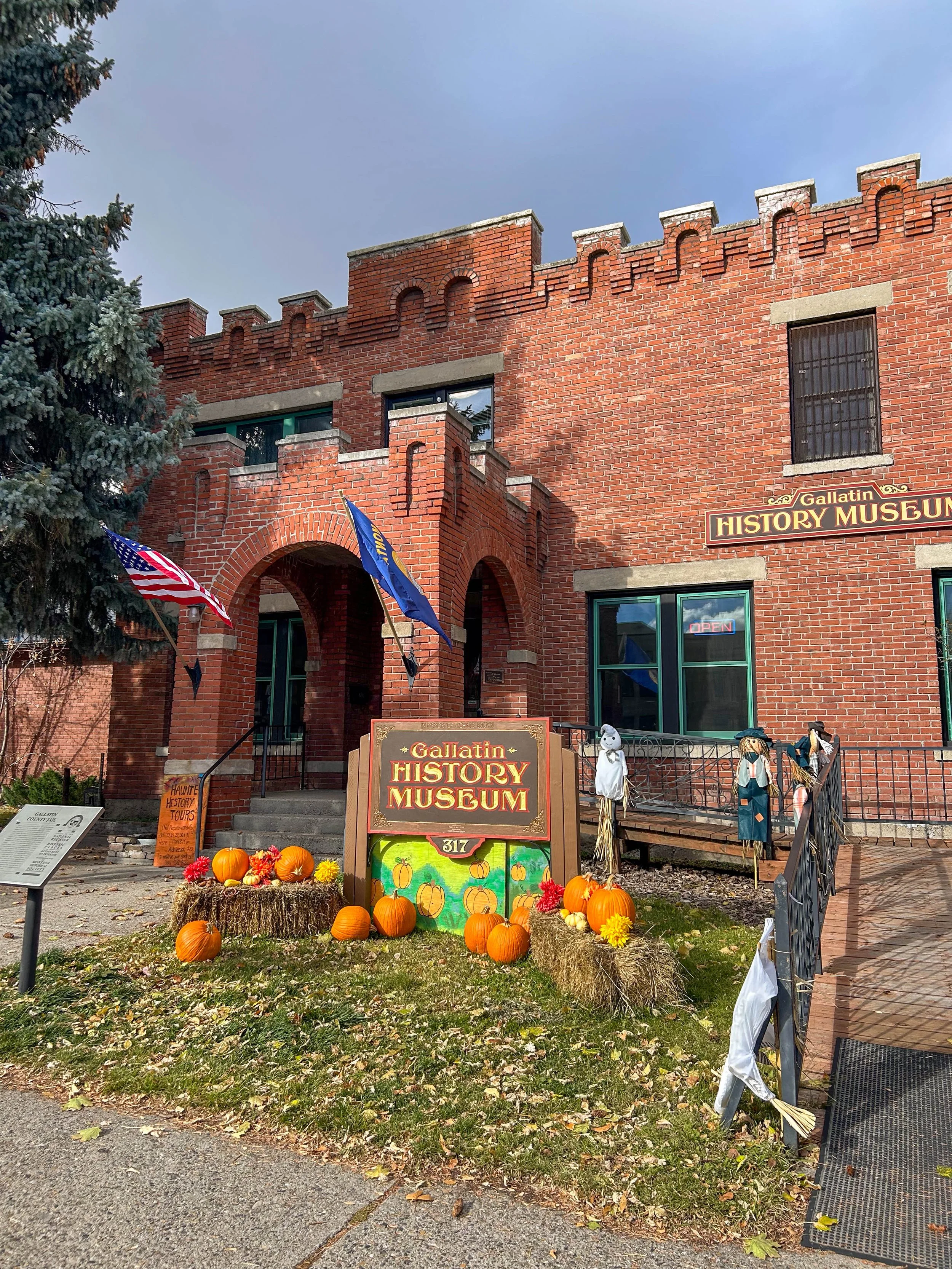
317 W Main Street | Gallatin History Museum
What is now known as the Gallatin History Museum, used to once be the 1911 Gallatin County Jail. Located at 317 W Main Street and designed by Bozeman architect Fred Fielding Willson, this brick building served as local law enforcement until 1982.
After the jail closed in 1982, county commissioners granted the Gallatin Historical Society use of the building, and it opened as a historic museum that year. While it was originally known as the Pioneer Museum, it changed its name to the Gallatin History Museum in 2014.
Today, you can tour the space and see preserved jail cells, hanging gallows, and a variety of rotating exhibits on regional Native American history, agriculture, pioneer life, and more.
During holiday season 2026, the museum will offer free day admission on December 5th, in honor of Bozeman’s annual Christmas Stroll.
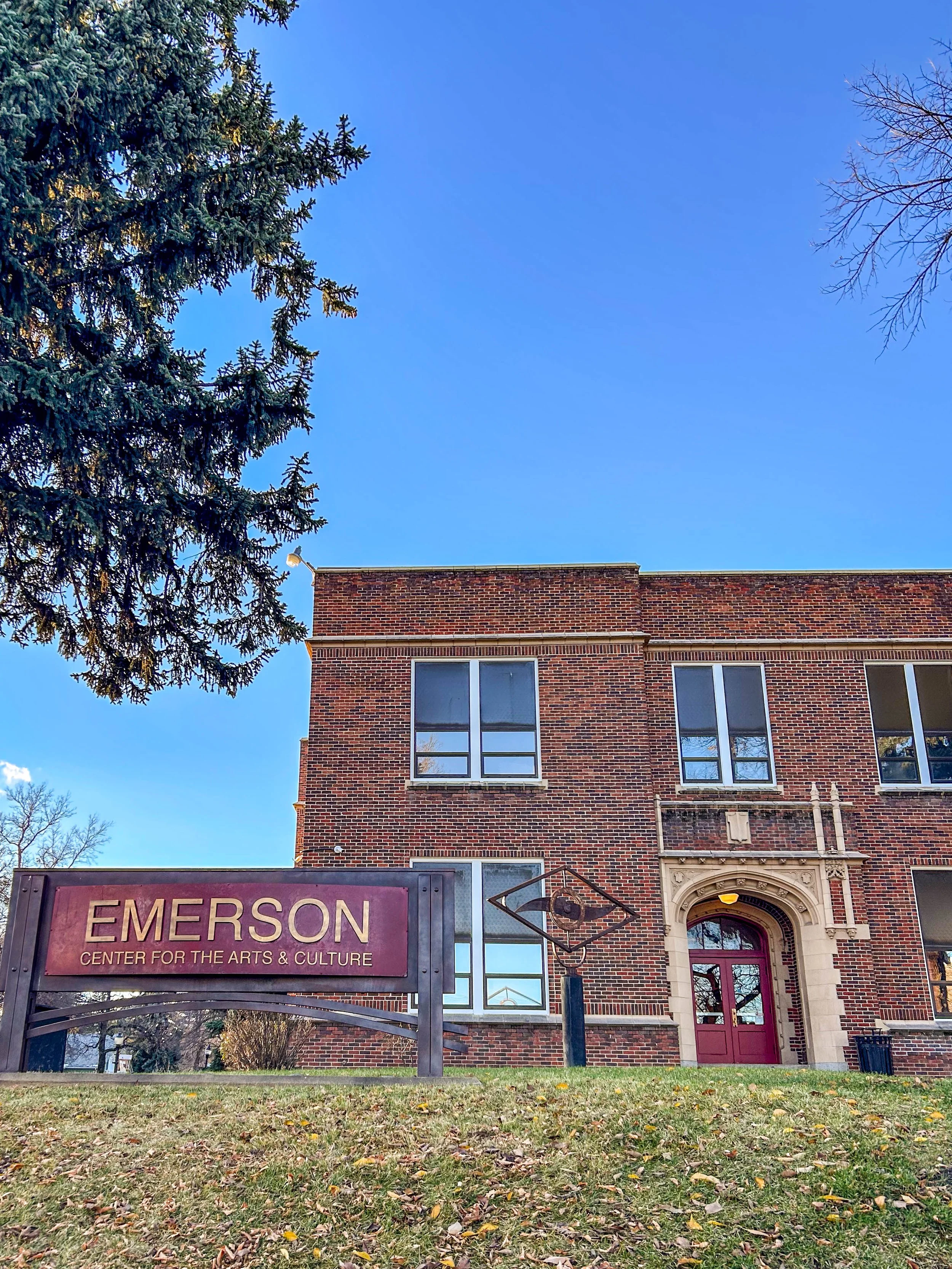
111 S Grand Avenue | Emerson Center for the Arts & Culture
Located at 111 South Grand Avenue in downtown Bozeman is the Emerson Center for the Arts and Culture, a historic English-Gothic structure. Designed by local architect Fred Willson between 1918 and 1920, the building was built on the site of Bozeman’s first public school (the West Side School of 1877), and its successor, City High School of 1892.
The Emerson building was named after philosopher Ralph Waldo Emerson, and was built with raked earth-toned brick and carved limestone trim. Inside, the building featured a central auditorium with imported French chandeliers, an entrance frieze, and a sunken gymnasium.
Between 1936 and 1939, an elementary wing and West Wing along Babcock Street were added using federal PWA funds, and the building operated as a public educational facility for 73 years until it closed in 1992.
In 1992, the Emerson was facing potential demolition, and so a group of local artists and community members stepped in to purchase the historic building. In 1993, it opened as a non-profit cultural hub, and now boasts a wide variety of artist studios, galleries, and community spaces.
Over the years, the Emerson has hosted many notable figures, including Eleanor Roosevelt and Jeannette Rankin.
The Emerson Center hosts a variety of holiday events - including the production of A Celtic Christmas in the Crawford Theater and the Holiday Noir on December 4th and 5th, 2026.
They’ll also host the SLAM Winter Showcase, an event celebrating the best of winter sports and entertainment, on December 3rd, 2026.
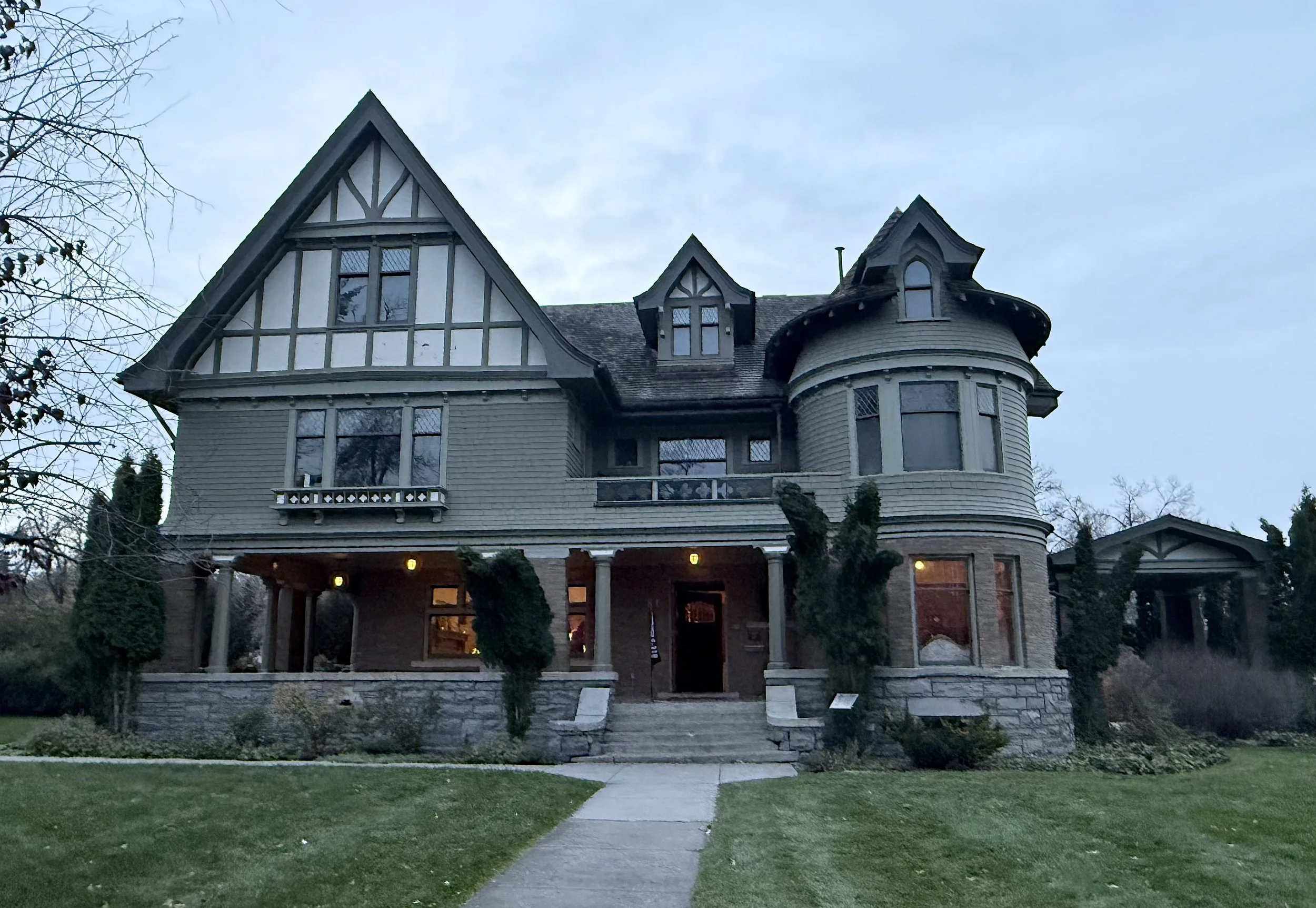
811 S Willson | Story Mansion
Ever wonder what happens to a cattle baron’s mansion? The historic T. Byron Story Mansion was built in 1910 for Byron Story and Katheryn Ferris at a cost of $50,000, a huge sum at the time. Byron was the son of Nelson Story, whose legendary Texas-to-Montana cattle drive helped shape the West. Sitting at 811 S Willson Avenue, the estate was designed by Helena architect C.S. Haire with assistance from Fred Willson. Spanning over 9,000 square feet, it has 22 rooms and blends Queen Anne, Shingle, and Tudor Revival styles.
After the family’s flour-milling fortunes shifted post-World War I, the estate was sold in 1922 to the Sigma Alpha Epsilon fraternity. For 81 years, it was a hub for Montana State University fraternity students.
In 2003, the City of Bozeman acquired the property and has since partnered with community groups like Friends of the Story Mansion to restore and preserve it as a community event venue, public landmark, and park. Today, the public can rent the first floor of the mansion, including the library, drawing room, dining room, wrap-around porch, catering kitchen, and more.
During the holiday season the Story Mansion usually hosts a Victorian Holiday Tea in the first-floor living room. To keep up with this year’s event, please check with the City of Bozeman Parks and Recreation Department.
